CALL US: (800) 836-8240

Hennion & Walsh Blog

In our July 22, 2010 post entitled, “The Broader Implications of a Housing Rebound,” we questioned how much of the surge in existing home sales seen thus far in 2010 was solely attributable to the federal tax credit program. While the final answer has yet to be determined, initial feedback seems to be pointing to a significant level of attribution.
Published: August 30, 2010 | Author: Kevin Mahn |
The markets stormed out of the gates this morning on news that the Chinese government planned to lift the 2 + year old artificial peg of its Yuan, or Renminbi, currency to the U.S. Dollar. While only minor increases in the value of the currency are expected initially, market professionals are taking a positive, long term view to this announcement.
Published: August 23, 2010 | Author: Kevin Mahn |
Nationally recognized research firm Dalbar recently produced the results of a study on the overall performance effects of individual investor behavior. In doing so, they compared the returns of the stock market (as defined by the S&P 500 index for these purposes) and the returns of the average individual investor in equities over a 20 year period that started on December 31, 1989 and ended on December 31, 2009. Interestingly, the study showed that the average return of the S&P 500 over that period was 8.20% while the average return of the individual investor was just 3.17% over the same time period. This represents a relatively stark 5%+ difference.
Published: August 12, 2010 | Author: Kevin Mahn |
We, at Hennion & Walsh, are observing growing momentum towards the stabilization of the residential real estate market as well as an intriguing opportunity for inclusion of this alternative asset class in diversified growth portfolios.
Published: July 22, 2010 | Author: Kevin Mahn |
In terms of the potential for a near-term pullback in the equities market, our research suggests that the probability of occurrence may be increasing. As you will recall from an earlier Portfolio Strategy News post on June 4, 2009, we contend that the S&P 500 200 Day Moving Average, with a 5% margin of safety, can be utilized, in conjunction with other market data, as a fairly reliable overall market timing statistic. It is our opinion, at Hennion & Walsh, that merely crossing through the 200 Day Moving Average is not a sufficient signal alone. When markets are moving quickly in the midst of seemingly trendless volatility, the average could be crossed in both directions on multiple occasions without presenting any clear market signals. As a result, we utilize a 5% margin of safety for our own internal assessments.
Published: July 01, 2010 | Author: Kevin Mahn |
It should not be surprising to see that consumer confidence is waning and yet the market appears to have been caught off-guard by the magnitude of the recent decline in consumer confidence. While reports showing that growth in China is beginning to slow down may have contributed to the turnaround in the equity markets, the major culprit appears to have been the Conference Board’s consumer confidence reading for June which showed the index dropping from 62.7 to 52.9 - close to a 16% month over month decline! The drop even caught the experts by surprise as economists were expecting a reading of 62.8.
Published: June 29, 2010 | Author: Kevin Mahn |
Exchange-traded products (ETPs) that allow an investor to short a particular asset class or sector represented by an underlying index have grown in popularity as the market has grown more volatile since the great global credit crisis of 2008. These short or “inverse” ETPs, flat and leveraged, have also been the subject of a lot of debate these days as market participants and regulators have attempted to address the topic with respect to suitability and adequate disclosure for individual investors.
Published: June 22, 2010 | Author: Kevin Mahn |
To understand the disappointment, one needs to drill down into the jobs data. The U.S. Labor Department reported that nonfarm payrolls rose by 431,000 last month. On the surface, this sounded very promising for an economy that needs to put its citizens back to work to help fuel a stalling economic recovery. However, it was also reported that economists were expecting approximately 515,000 jobs to be added and 411,000 of the 431,000 jobs that were added (i.e. 95%) were actually temporary jobs with many tied to this year’s census project. Essentially, there was no job growth despite the headlines.
Published: June 08, 2010 | Author: Kevin Mahn |
As unemployment increases, consumer confidence decreases. As consumer confidence decreases, consumer spending decreases. As consumer spending decreases, corporate earnings decrease - absent any efficiency gains or work force reductions.
Published: June 02, 2010 | Author: Kevin Mahn |
According to the May 2010 Morningstar Direct Fund Flows Update, investors continue to draw money out of money market funds at a record pace. In April alone, investors pulled out $118.8 billion. Year-to-date ("YTD") in 2010, money market outflows now total $443 billion, which surpasses the entire amount drawn out or money market funds in 2009 - in just four months!
The Economist termed this past weekend's emergency bailout package for Greece as "shock and awe" due to the size of the $146 Billion combined European and IMF commitments to the country. The widely read magazine went further to suggest that they hope the package will convince the markets that loan commitments will cover the potential bond losses and contain the issue from spreading into Portugal and, perhaps more dangerously, into Spain. This is now the third attempt at a solution for the sovereign debt crisis in Greece. Previously the Euro-zone leaders seemed to be trying to buy time but spiraling Greek bond rates, which intensified after Moody's recently cut Greek bonds ratings to junk status, along with fears of the contagion spreading to Spain - which has a much larger GDP than Greece and Portugal combined - forced their hand.
According to the Wall Street Journal, U.S. consumer spending rose twice as fast as income in March of 2010 as personal savings dropped to its lowest level in 18 months. The Commerce Department reported, "Consumer spending increased by 0.6% from the prior month, likely lifted by government efforts to spur economic growth, but personal income rose just 0.3% on a weak labor market. As a result, the U.S. saving rate dropped to 2.7%, its lowest level since September 2008."
Published: May 05, 2010 | Author: Hennion and Walsh | GDPeconomic recoveryCommerce Department
The global equity markets machine continued to churn full speed ahead in April as evidenced by the S&P 500's monthly advance of 1.25% and the DJIA's increase of 1.06%. As a result, the S&P 500 and the DJIA are now up 7.05% and 6.42% respectively thus far in 2010. This early 2010 gain stands on top of the meteoric rise that took place in the equity markets during the final three quarters of 2009. This situation has left many investors in a precarious state. On the one hand, they feel as though they may have missed out on a large part of the market recovery - which probably is true if one is only looking at the U.S. stock market (Large Cap companies in particular). On the other hand, they are growing more and more concerned that a pullback, or extended pause, in the equity markets is increasing in likelihood -which is probably also true especially considering the continuing difficulties that the P.I.I.G.S. countries (i.e. Portugal, Italy, Ireland, Greece and Spain) are presenting in terms of their own sovereign debt.
Briefing.Com recently noted that as of the end of last week, about one third of the S&P 500 firms reported earnings results for the 1st Quarter of 2010. Bespoke and Briefing.com both highlighted that about 83% of the earnings reports thus far beat analysts' estimates. To put this in a historical perspective, Thomson Reuters pointed out that, going back to 1994, 60% of earnings reports typically beat analysts' estimates in a given quarter. As a result, it can reasonably be concluded that it was a stellar first quarter for the majority of U.S. large cap firms.
Published: April 27, 2010 | Author: Hennion and Walsh |
The DJIA has just crossed 11,000 - a significant milestone in the continuing recovery of this widely recognized U.S. blue-chip index. In fact, the last time the Dow closed above 11,000 was back on September 26, 2008. However, before everyone starts to uncork their champagne bottles, we, at Hennion & Walsh, would suggest that it is too soon to signal "all-clear" for the equity markets and too soon to declare an official end to this current U.S. recession.
The likelihood of the Chinese Yuan starting to appreciate relative to the U.S. Dollar has increased recently as a result of pressure from the U.S. government on the Chinese government to lift the so-called "peg" that is in place between the Chinese Yuan and the U.S. Dollar in addition to mounting concerns that inflation is completely eroding the current rate of interest that Chinese investors are earning on bank deposits.
Published: March 12, 2010 | Author: Hennion and Walsh | Investor educationglobal economyHennion & WalshChinese Yuancurrency pegChinese government
In a positive economic development, Mergers & Acquisitions ("M&A"), as many analysts have predicted, have already started to heat-up in early 2010. In fact, BersteinReseach has forecasted at 35% increase in M&A activity in 2010. Some of the more noteworthy M&A deals that have been announced thus far in 2010 have included:
Published: March 10, 2010 | Author: Hennion and Walsh | Kevin Mahnfinancial marketsMergers & AcquisitionsM&Aasset classesfinancial trends
The current bull market will mark its official 1 year anniversary this week - March 9th to be specific. History suggests that this is a critical milestone and one in which investors should pay attention to. According to Bespoke Investment Group, of the 26 bull markets - with bull markets defined as at least a 20% rally that was preceded by at least a 20% decline in the S&P 500 - that have taken place in the history of the S&P 500, 13 of them (i.e. 50%) have lasted for more than one year. The average length and gain of bull markets that pass the one year anniversary mark is 4.4 years and 152.81% respectively. Furthermore, only two of the previously highlighted 13 one year + bull markets lasted fewer than 2 years.
Published: March 09, 2010 | Author: Hennion and Walsh |
As part of our annual portfolio reconstitution process at Hennion & Walsh, we strive to build forward looking, asset allocation-oriented portfolios based on our internal views of where we believe both the markets and economy are heading for the next year.
What to make of the Fed's Recent Interest Rate Hike The Federal Reserve surprised virtually everyone after the markets closed yesterday by announcing their intentions to raise the Discount Rate by 0.25% (i.e. 25 Basis Points) from 0.50% to 0.75%. This marks the first time that the Federal Reserve has raised the Discount Rate since June of 2006.
Published: February 23, 2010 | Author: Hennion and Walsh | Kevin Mahninflationmonetary policyU.S. economic recoveryInterest rateDiscount RateDiscount windowFederal Funds Rate
If you have been wondering what specifically has been one of the main culprits in the stock market devaluation in recent days, look no further than to a group of countries in Europe affectionately known as the P.I.I.G.S. The countries, which many believe are the weaker components of the Euro-zone, include Portugal, Ireland, Italy, Greece and Spain.
Published: February 08, 2010 | Author: Hennion and Walsh |
Using the Effective Federal Funds Rate as a proxy for interest rates, it is reasonable to conclude that interest rates are at historic lows and likely to only go higher.
The Commerce Department today reported a 5.7% increase in gross domestic product ("GDP"), at an annual rate, during the fourth quarter of 2009 - 5.7%! This exceeded the 4.8% consensus median forecast by close to 20% on a relative basis. It also followed a 2.2% GDP growth rate in the third quarter of 2009. So why is the U.S. stock market barely reacting to this seemingly positive trend? The answer to this question lies in some of the significant data components underlying this most recent GDP report.
Earlier this morning, credit rating service Standard & Poor's ("S&P") revised its credit outlook on Japan to "negative" from "stable." This could seemingly pave the road to a future downgrade to Japan's current AA long-term rating. As part of rationale behind the revision to their credit outlook for the country, S&P cited concerns over amount of Japanese government debt outstanding. Japan's government debt is already among the highest in the world and S&P thinks the debt burden might peak at a level as high as 115% of their Gross Domestic Product ("GDP") over the next few years.
U.S. existing home sales fell by 16.7% in December 2009, to 5.54 million units, which was far worse than many analyst expectations. This report follows much better than forecasted existing home sales results this past Fall season - which culminated in a 26% surge over the three months prior to December.
According to the Bureau of Labor Statistics, the current official unemployment rate is 10%. The official unemployment rate, often referred to as the U-3 rate, represents the total unemployed as a percentage of the civilian labor force.
In the annals of Wall Street lore, many professional investors believe that the 'January effect" has a positive impact on stocks during the initial weeks of a new year. The belief holds that investors who sold stock at the end of the previous year for tax reasons look to buy back stocks at the beginning of the new tax year, thus driving stock prices higher. In addition to tax-related trading, we believe that the January effect may be more pronounced this year than in previous years given the amount of money still sitting on the sidelines and in bond funds.
Published: January 05, 2010 | Author: Hennion and Walsh | emerging marketsBusinessHennion & WalshFederal Reserve System2010 stock market outlook
Closed-end funds are funds with a fixed number of shares outstanding and, as a result, trade more like a share of common stock than their open-end fund cousins which trade at their net asset value ("NAV"). Shares of closed-end funds can trade at a price that is either a discount or a premium to their net asset value based upon market demand. This condition can often lead to much greater volatility and price dispersion for closed-end funds when compared to open-end funds. For example, according to the Stifel Nicolaus October 2009 Closed-End Funds Monthly Review report, closed-end funds have traded at an average discount to their NAV of 4.52% over the last ten-year period.
Last week, prior to the Thanksgiving holiday, the Dubai government announced that it will look to restructure Dubai World; a government owned conglomerate, and asked creditors for a six-month delay on outstanding debt payments. The total liabilities of Dubai World are estimated to exceed $60 billion with existing creditors spread across much of the developed and emerging world markets. The announcement took much of the world by surprise and caused the U.S. stock market to open over 200 points lower although the drop was essentially cut in half by the close of the shortened trading day last Friday as traders and investors put the announcement into perspective. Additionally, as I write this post, the United Arab Emirates has indicated that it would step in, as needed, to support local banks through a special liquidity facility. This should help to stem fears of a potential run on the local banks that could have negative ramifications throughout the region.
We have all heard the age-old wisdom that gold can provide for a hedge against inflation. The Federal Reserve has recently contended that inflation is not an immediate threat or concern to them. In fact, Ben Bernanke, Chairman of the Federal Reserve, said in a speech earlier this week that "the U.S. economy still faces considerable challenges but the most likely outcome is moderate growth with subdued inflation." Despite this, Gold has rallied significantly in 2009 - noticeably in recent weeks. What then is accounting for rising Gold prices?
I couldn't help but find it amusing yesterday when one of my fellow panelists during a discussion at The Art of Indexing Summit in New York City suggested that U.S. Treasury Bills, while once considered as a proxy for "risk-free return" perhaps are now a better proxy for "return-free risk." All kidding aside, many well-respected economists throughout the world are now calling into question the perceived safe haven status of U.S. Treasuries and, in a similar vein, if the U.S. Dollar will remain as the world's reserve currency. Regarding the latter, some have suggested that the U.S. Dollar could eventually be replaced by the Euro, the Japanese Yen or even the Chinese Yuan.
Consumer confidence in the United States appears to be waning after a recent wave of optimism. According to a recent Reuters/University of Michigan Survey of Consumers, consumer sentiment fell from 73.5 in September to 69.4 in October. Further, the Survey's economic outlook index also decreased, falling from73.5 in September to 67.6 in October.
The Federal Funds Target Rate has been residing within the 0.00% - 0.25% range for all of 2009 thus far. The Federal Reserve has maintained this target range with the hopes of providing additional credit opportunities to allow for economic stimulus.
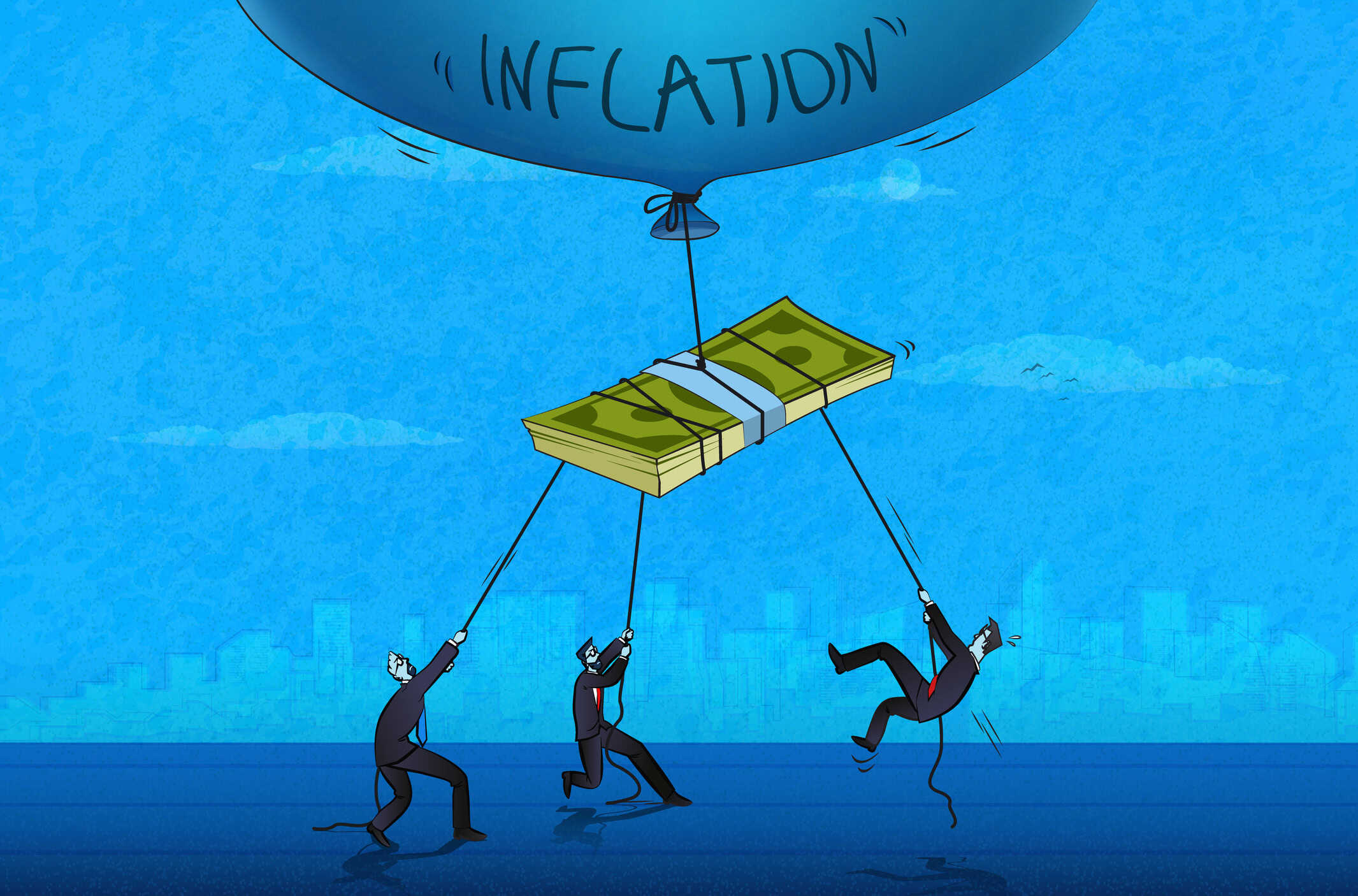
According to Russell Investments, as of September 30, 2009, core inflation is currently at 1.40%, below the Federal Reserve's unofficial target range of 1.50% - 2.00%. Hence, many have concluded that inflation is not present and perhaps not an imminent threat. We, however, believe otherwise. We, at Hennion & Walsh, believe that the threat of inflation may be upon us already and the impact of inflation could have a significant impact on the economy and on the portfolios of individual investors.
Published: October 23, 2009 | Author: Hennion and Walsh | Equitiesinflation-proof your portfoliocore inflation Federal Reserve
According to Thomson Reuters, over 70% of companies beat their 2nd quarter estimates which marked the highest percentage of companies surpassing estimates since Thomson Reuters began tracking this type of data back in 1994. To put this in a historical perspective, in a typical quarter, approximately 61% of companies eclipse their estimates. One particular industry showing particular strength was Health Care which interestingly is also one of the only industries that has actually added jobs in the last twelve month period. However, we, at Hennion & Walsh, believe that third quarter earnings should be carefully dissected before reaching any forward-looking conclusions and further believe that this holiday season will likely disappoint and lead to lower fourth quarter earnings than many analysts are predicting at this point in time.
A recent study by Morningstar that was discussed in a Wall Street Journal article by Sam Mamudi entitled, "Active Management Loses in Risk Study," added further fuel to the fire of the ongoing debate over the merits of active and passive investment management strategies. As a reminder, active investment strategies generally attempt to outperform their associated benchmark indexes while passive investment strategies generally attempt to track, or stay in line with, their associated benchmark indexes. While it has widely been established that active mutual fund managers generally underperform their benchmark indices, the Morningstar study goes further to conclude that, on a risk adjusted basis, even more active mutual fund managers fall short. Specifically, the Morningstar study found that over the past three years, only 37% of actively managed mutual funds outperformed their associated Morningstar indexes on a risk, size and style adjusted basis. Put differently, 63% of actively managed mutual funds underperformed their associated Morningstar indexes over the past three years on these terms. The results were similar over five and ten year timeframes.
August retail sales soared far higher than expected, rising 2.7% during the month. Backing out the impact of the "cash for clunkers" program, retail sales, excluding autos, still rose by 1.1%. The overall gain, led by a 10.6% growth at auto dealers, was the strongest month over month gain since January 2006. The most positive aspect of these reports, in our view at Hennion & Walsh, was the strength observed in the traditional "back to school" segments such as department, apparel, sporting goods and hobby stores. While these are sequential gains and retail sales are still off last year's pace by approximately 5%, this data suggests there may be upside surprise potential for retail sales during the 2009 Holiday season.
Hennion & Walsh CIO, Kevin Mahn quoted in the Wall Street Journal.
Published: September 10, 2009 | Author: Hennion and Walsh |
Hennion & Walsh CIO, Kevin Mahn quoted in Dow Jones Newswires.
Published: September 09, 2009 | Author: Hennion and Walsh | stocksKevin Mahneconomic trendsHennion & Wash
Hennion & Walsh CIO, Kevin Mahn, quoted in SmartMoney.
According to an August 26th Bloomberg report by Shobhana Chandra, new home sales increased by 9.6% in July - the most since February of 2005. The gain, due in large part to historically low interest rates, incentives for first-time buyers and lending support from the Fed, translates to an annualized pace of 433,000 units. It also represents the 4th straight increase in new home sales, following an equally impressive 9.1% gain for June. Perhaps even more importantly, the number of houses for sale dropped to the lowest level in 16 years.
To borrow from an often used slogan, with slight improvisation, "It's the spending stupid." The surest way to get our economy back on track again is to have businesses and, even more importantly, consumers start spending again. In an economy where 70% of growth comes from spending, reports that show Americans saving more and spending less are generally not received positively by economists. The question then becomes how best to achieve this seemingly simple objective of encouraging individuals and companies to start spending again.
Published: August 11, 2009 | Author: Hennion and Walsh | Kevin MahnrecessionU.S. economyeconomic recoveryeconomic trendsU.S. consumerAmerican consumerconsumer confidence
We have been repeatedly asked over the course of the last several weeks if there is in fact a bond (or more specifically a U.S. Treasury bond) bubble that is about to burst. A valid argument can be made for the likelihood of a drop in U.S. Treasury bond prices in the near future due to the following factors:
Published: August 06, 2009 | Author: Hennion and Walsh | Portfolio strategyKevin MahnS&P 500Hennion & WalshU.S. Treasury bondsLong-term Treasury BondsEquitiesfourth quarter4Q
According to a July 27, 2009 Economic Report posted on MarketWatch, June's new home sales rose by a stronger than expected 11% to a seasonally adjusted annual rate of 384,000. This represented the largest amount since November 2008. Furthermore, inventories of unsold homes fell 4.1% in the month June. The adage that real estate is all about location, location, location seems to still be relevant during this particular housing market recovery period. For example, the report also showed that sales rose over 29% in the Northeast, increased over 43% in the Midwest and climbed over 22% in the West while falling over 5% in the South. The overall improvement in sales is an encouraging sign that the housing market may finally be stabilizing.
Published: July 30, 2009 | Author: Hennion and Walsh |
Inverse exchange-traded funds ("ETFs") and exchange-traded notes ("ETNs"), both flat and leveraged, have been the subject of a lot of debate these days. I believe that a lot of the confusion and concern stems from a basic need for the industry as a whole to do a better job of educating the investing public about the rapidly evolving market of exchange-traded products. For example, the inverse products themselves may or may not be appropriate for long term investors because of their daily valuation mechanism. Inverse products essentially reset every day which is why buy-and-hold type investors are dismayed that the returns of the inverse ETFs and ETNs often vary significantly from what would be expected given the performance of the underlying index.
Published: July 27, 2009 | Author: Hennion and Walsh |
Hennion & Walsh CIO, Kevin Mahn, quoted in the New York Times.
Published: July 23, 2009 | Author: Hennion and Walsh | Kevin MahnU.S. economyHennion & Walshmutual fundseconomic trends
As an update to our June 4, 2009 post entitled, "The S&P 500 Just Crossed its 200-Day Moving Average - So What", I am pleased to report that the S&P 500 Index, with its closing level of 932.68 on July 15, 2009, has now crossed through our suggested momentum turning technical level of > + 5% of the 200-Day Moving Average. This represents the first change to this technical signal since November 26, 2007.
Published: July 16, 2009 | Author: Hennion and Walsh |
The Federal Reserve currently finds itself in a difficult balancing act. On the one hand, it is trying to be an active participant in thawing the frozen credit markets and stimulating a U.S. economy that has been in recession since December of 2007 (according to the National Bureau of Economic Research - "NBER"). On the other hand, it recognizes the growing threat of inflation and the damage that inflation could have on an economy that is likely to start finding its legs again later in the year. In recognizing this threat, it realizes that some its own actions with respect to quantitative easing have added to mounting inflation concerns and many, including members of my research team here at Hennion & Walsh, are interested in the details of the Fed's exit strategy in this regard.
Published: July 01, 2009 | Author: Hennion and Walsh |
According to the Investment Company Institute ("ICI"), as of April 2009, there are now 726 Exchange-traded funds ("ETFs") with over $529 billion in assets. Since 1995, according to my calculations, the number of ETFs has increased by approximately 96% per year over this period. Not only has the number and type of ETFs increased but the popularity of these products across institutional investors, financial advisors and individual investors has also risen over this time frame. For evidence of this trend towards ETF utilization, as I referenced in a post earlier this year, one needs to look no further than to Monday, September 15, 2008. According to Barclays Global Investors, this day represented one of the largest trading days, based on volume, in U.S. history and ETFs accounted for 40% of the trading volume in U.S. equities that day - 40%!
Published: June 30, 2009 | Author: Hennion and Walsh |
Published: June 15, 2009 | Author: Hennion and Walsh |
Published: June 04, 2009 | Author: Hennion and Walsh | Kevin MahnS&P 500market recoveryHennion & Walsh200-Day Moving Averagesustained recoveryU.S. stock market
Published: May 29, 2009 | Author: Hennion and Walsh | Bill WalshHennion & WalshU.S. credit ratingU.S. TreasurysAAA sovereign-credit ratingMarketWatch
Published: May 12, 2009 | Author: Hennion and Walsh |
Published: May 08, 2009 | Author: Hennion and Walsh | Gross Domestic ProductGDPjobsunemploymentrecessionU.S. economyeconomic recoveryconsumersDepartment of Labor
Published: April 14, 2009 | Author: Hennion and Walsh | ETFsExchange-Traded Fundoil marketcontangooil ETFsbackwardation
Published: April 03, 2009 | Author: Hennion and Walsh | Bill Walshmediacorporate bonds
Published: April 02, 2009 | Author: Hennion and Walsh |
Published: April 01, 2009 | Author: Hennion and Walsh |
Published: March 26, 2009 | Author: Hennion and Walsh |
Published: March 19, 2009 | Author: Hennion and Walsh |
Published: February 24, 2009 | Author: Hennion and Walsh | Bill Walsh
Published: February 23, 2009 | Author: Hennion and Walsh |
Published: February 20, 2009 | Author: Hennion and Walsh |
Published: February 17, 2009 | Author: Hennion and Walsh | Bill WalshBloomberg
Published: February 16, 2009 | Author: Hennion and Walsh | EconomicsGross Domestic Productconsumer spendingrecessionCongressGovernment spendingStimulus bill
Published: February 04, 2009 | Author: Hennion and Walsh | InvestmentsAsset allocationInvestor educationPortfolio strategyMicro-Cap stocksLarge-Cap stocks
Published: February 03, 2009 | Author: Hennion and Walsh | TrendsInvestor educationGDPrecessionNational Bureau of Economic ResearchDJIADow Jones Industrial Averagefinancial markets
Published: January 22, 2009 | Author: Hennion and Walsh | Asset ManagementAsset allocationPortfolio strategyExchange-traded fundsETFs
Published: January 21, 2009 | Author: Hennion and Walsh | Wall Streetcredit crisesbankingFDICFederal Reserve Deposit Insurance
Published: January 09, 2009 | Author: Hennion and Walsh | Asset ManagementAsset allocationTrendsS&P 500
Published: January 08, 2009 | Author: Hennion and Walsh | U.S. economystock marketS&P 500volatilitybear market
Published: December 25, 2008 | Author: Hennion and Walsh |
Published: December 23, 2008 | Author: Hennion and Walsh | Asset allocationPortfolio strategyS&P 500volatility
Published: December 22, 2008 | Author: Hennion and Walsh | Gross Domestic ProductGDPU.S. economystock market
Published: December 22, 2008 | Author: Hennion and Walsh | InvestmentsInvestor educationPortfolio strategyrecessionCash bubbleVIXVolatility indexEconomy
Published: December 19, 2008 | Author: Hennion and Walsh | Gross Domestic ProductGDPrecessionU.S. economyglobal
Published: December 19, 2008 | Author: Hennion and Walsh | Investor educationFederal ReserverecessionU.S. economymortgage bondslarge-capssmall-caps
Published: December 18, 2008 | Author: Hennion and Walsh | Kevin Mahncommodity pricesmarket speculationemerging marketsUS dollar
Published: December 17, 2008 | Author: Hennion and Walsh | TrendsKevin MahnGross Domestic ProductGDPconsumer spendingjobsunemploymentrecession
Published: December 16, 2008 | Author: Hennion and Walsh | Kevin MahnFederal Reserveinterest ratescredit crisis
According to Wikipedia, in financial circles, capitulation is a term often used to �indicate the point in time when investors have decided to give up on trying to recapture lost gains as a result of falling stock prices.� Under such circumstances, investors generally lose complete confidence in the financial markets and this lack of confidence pushes them to the sidelines until their confidence is restored. History has taught us that these sorts of market recovery timing efforts often result in investors missing out on a significant part of the eventual recovery. Regardless, this is often what happens when capitulation sets in and investors essentially surrender to their fear of more potential losses.
1 of 20
Free Offers & Services